 MAKENEXA
5-Axis CNC Machining
5-axis CNC for multi-face and hard-to-reach geometry
Upload CAD when one setup beats a stack of re-fixturing. MakeNexa reviews workholding, tool access, collision zones and critical surfaces across indexed and simultaneous 5-axis routes, then confirms fit on the reviewed quote.
Upload 5-Axis RFQ View 5-Axis Specs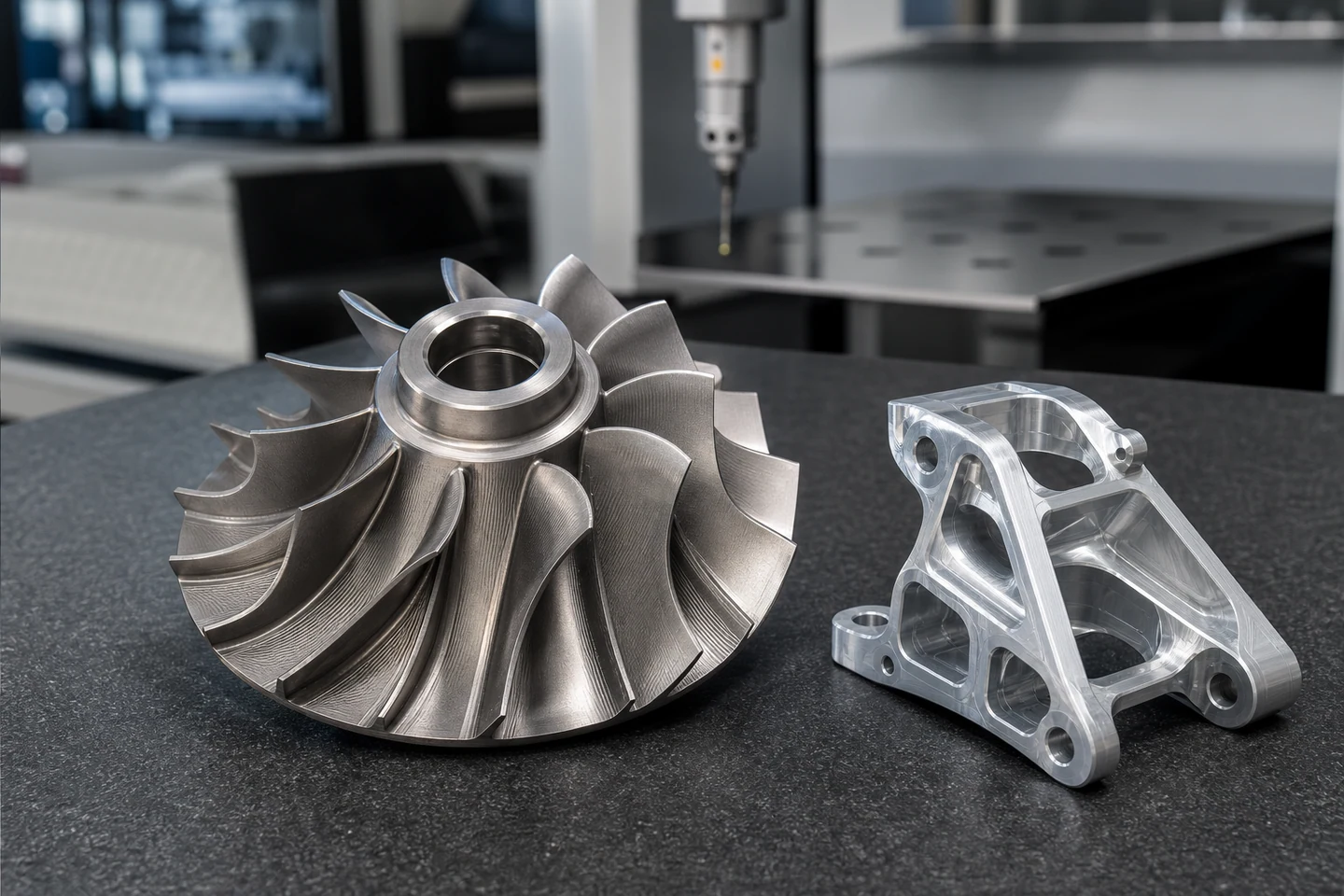
Engineering Specifications
5-axis CNC machining planning specs
These values are early planning references. Actual routing depends on part geometry, tool reach, setup strategy, material, tolerance notes, surface finish, and inspection access.
| Specification | Planning range | DFM notes |
|---|---|---|
| 5-axis approach | Indexed 3+2 and simultaneous 5-axis routes across the supplier network. The value is fewer setups: each re-fixture adds roughly 0.05 mm of positional error between faces. | The project strategy is selected from geometry, surface continuity, workholding and supplier fit. |
| Part types | Multi-face housings, impellers, contoured components, tooling and lightweight brackets | Part category does not define acceptance. The CAD model and drawing control the routing decision. |
| Materials | Aluminum, stainless steel, alloy steel, titanium, brass, copper and engineering plastics. Titanium Grade 5 at 880 MPa yield cuts at commonly 30 to 60 m/min against 300 and above for aluminum. | Material grade, blank size, heat treatment, and machining behavior are confirmed during RFQ review. |
| Tolerances and surface finish | ±0.125 mm (±0.005 in) as standard practice and ±0.025 mm (±0.001 in) on named precision features, with Ra 1.6 to 3.2 µm as machined. Datum-referenced controls read to ASME Y14.5. | Surface profile, blend areas, and inspection method should be called out where they matter. |
| Access and fixturing | Tool reach, holder clearance, collision zones and fixture access reviewed per model. Multi-axis access allows shorter tooling, but pocket depth beyond about 4x cutter diameter and walls under 0.8 mm still drive cost. | Small radii, deep cavities, underside features, and hidden faces may need design or fixture changes. |
5-Axis DFM
When 5-axis routing improves a machining plan
5-axis machining can reduce repositioning and improve feature access, but the best route still depends on fixture stability, inspection needs, and tool path risk.
Multi-face feature access
5-axis routing is useful when features are spread across multiple angled faces or when a part needs tool access around complex forms.
- Reduce avoidable re-clamping and datum shifts
- Improve access to angled holes, pockets, and contoured faces
Tool path and inspection planning
Complex surfaces and angled features need clear tolerance and finish requirements so the review can plan tool paths, datum strategy, and inspection access.
- Mark surfaces controlled by profile or roughness
- Identify datums and inspection-critical access areas
RFQ Review
Upload CAD for 5-axis route review
Attach the model, drawing, material preference, finish notes, datum scheme, critical features, and target quantity.
Attach 5-axis CNC files in the RFQ form
STEP, STP, IGES, PDF, ZIP. Include drawings for profile, datum, and finish requirements. Open RFQ formRelated Routes
Compare 5-axis CNC with standard CNC routes
Not every complex-looking part needs 5-axis machining. The RFQ review can compare standard milling, turning, and 5-axis paths.
CNC Machining
Review the combined CNC overview for parts that may mix milling, turning, and secondary operations.
CNC Milling
Use standard milling for prismatic parts where tool access and setup count are manageable.
CNC Turning
Use turning for rotational parts, shafts, sleeves, and fittings that are lathe-first geometries.
Alternative Route Review
If the geometry may suit a non-CNC validation route, submit the use case and let the team confirm support before quoting.
5-Axis FAQ
5-axis CNC design questions
Prepare the RFQ package with the features and surfaces that make 5-axis routing necessary.